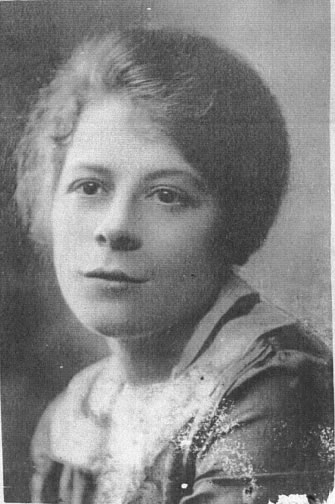
Rosamond Hester Elizabeth was born 5 January 1810, the 13th of 21 children of William Pennell, Esq., British consul-general to Brazil. At the age of six weeks she was adopted by her brother-in-law the Rt. Hon. John Wilson Crocker. Croker (1780-1857) was a well-known politician and essayist and in 1809 was Secretary to the Admiralty. ... In 1832, Miss Croker married Sir George Barrow of Ulverstone (1806-1876), Chief Clerk at the Colonial Office, who succeeded his father as second baronet in 1848. Lady Barrow died in 1906.
Seventh and Eighteenth Century Europeon Art, page 184, Sir Thomas Lawrence (artist)
The only reason Rosamond Croker ended up being on the list of tall tales is that her birth name is Pennell. W. J. C. Pennell of Australia in December 1969 actually refers to Rosamond's birth father as an "ancestor". I quote his 1969 letter below, not because I think she's related, but because you might.
The next ancestors of whom any important records are extant is Richard Pennell, Commander of the British East Indian Company's ship "HAWK". [Probate is on Ancestry and verifies this information.] He settled in Topsham in Devonshire and married the sister of Charles II's physician. He died in May of 1797 aged 42 and is buried in St. Margaret's Church, Topsham near Lectern.
His great-grandson [I doubt this, maybe grandson] William Pennell was appointed British Council at Bordeau, France in 1814. During his Consulate in this city times were very tumultuous and full of adventure. There was a magnificent diamond he kept as a heirloom in the family which was given to him by the duchesse D'Anglouleme [This is Marie Theresa the only child of Marie Antoniette and the King that lived to adulthood] as a reward for his help in aiding her escape from Bordeaux on a British frigate.
Later he became British Consul at Bahia, Brazil and in 1829 was appointed Consul-General for the Empire of Brazil. He married Elizabeth Carrington daughter of a Church of England Clergyman and had 22 children, many of whom became distinguished men and women. Once (sic) of the sons, Sir Henry Pennell held the position of First Clerk of the British Admiralty and was the author of a continuous system for manning the navy.
W. J. C. Pennell, Sydney, Australia, December 1969
There is a lot of documentation on Ancestry and corroborating data from "Pennell Family Records". A not-so-quick Googling of facts did show me that Charles Stuart of appointed Ambassador of France in 1815 and then he was sent to Brazil from 1825 to 1826. A Consul-General is subordinate to the Ambassador, so I'm thinking William Pennell likely following Charles Stuart in his appointments.
So there are two Marie's that escaped France: Marie Theresa (dau. of Marie Antoniette) and Louise Marie (sister of Marie Theresa's husband). The story of William Pennell assisting in these escapes could very well be the fodder for the Marie deFawcett stories, and somehow the story went from the Pennell side to the Crew side.
One more point that makes me believe there's been a mash-up of family stories. The quote above says that Elizabeth Carrington has 22 children. What a coincidence! That's the same number of children Susan Shephard supposedly had and the most children I've been able to find is 12.
And also, the "de" did NOT designate Marie deFawcett as French. It only showed that she was of a culture that used the "de" to either show aristocracy or to show Fawcett was her husband's surname, not hers. This was a French, Spanish, Portuguese, practice.
Can't help but wonder, where "Fawcett" came from?
Also, what a juxtaposition of the Pennells we know as my ancestors in Bethnal Green and the Pennells who were the ancestors of Miss Rosamond Croker.
Here's Rosamond's story:
Among the girls, chief interest is attached to Rosamond the 13th child who, at the age of 6 weeks, was adopted by her eldest sister then the wife of the Right Honourable John Wilson Crocker, M.P. It was only by accident that she eventually learned that her supposed mother was really her sister. She was celebrated for her beauty and her portrait, at the age of 17 by Sir Thomas Lawrence, is a renowned and familiar pictures. Her portrait bears the title "The Beautiful Miss Crocker" and was once owned by American Billionaire Banker, J. Pierpont Morgan. The painting is now owned by the buffalo Fine Ars Academy and is exhibited in the Albright Art Galley, Buffalo, New York, U.S.A.
When a child at Kensington Palace Rosamond was sent to play with the little girl who became Queen Victoria. The Crocker Papers are full of references to "Nony" as she was called.
"June 13, 1831 -- took little girl (Nony) to the King's (George IV) Ball. We arrived five minutes after the time appointed, half-past eight. His Majesty was already in the room. He was very gracious to Nony and kissed her as he departed. William IV, when she was presented at his Court kissed her twice and it was explained as King, and the second time as man!"
Robert Eady Sr. is my Great-great-great-grandfather.
The following was received by me from Clarence Eady, March 22, 1993. Clarence was an avid Eady genealogist before the time of the internet.
Robert Eady Sr.
Robert Eady Sr. was the third child born to John (Ady) Eady and his wife Elizabeth Hibbert or Hibbard. He was born in East Woodhay, Hampshire, England in early Mary 1785. He was baptized May 8, 1785. Nothing much is known about his childhood. We do know he had none or very little schooling as he could only sign his name with an "X".
1805 - Age of 22, in Gosport, Hampshire, Robert joined the British Army. 1806 - Sent to the East or West Indies. He served there for 1 year and 159 days. 1807 - Returned to England 1807 - August 24, Gosport, Hampshire, age 23, enlisted in the 37th Regiment of Foot for unlimited service 1807 - 37th Regiment of Foot is sent to Jamaica 1808 January 17 to March - Private Robert Eady is on pay list of 37th Regiment of Foot in Trinidad 1809 September 24 - returned to Derby, Derbyshire, England 1810 January 16 - Robert Eady and Mary Hust (Hearst) were married St. Peters Church, Derby, Derbyshire 1811 March - regiment was in Cork, Ireland where daughter Elizabeth was born. 1812 April - stationed with 37th Regiment in Gibralter 1813 September-October - yellow fever takes the lives of 70 soldiers in Gibralter 1813 December - son George is born in Gibralter (my Great-great-grandfather) 1814 February 10 - regiment leaves Gibralter for France by way of Spain 1814 April-June - regiment is in France, Napoleanic Wars are ending in Europe around this time. 1814 July 5 - regiment leaves Bordeaux, France for Montreal, Upper Canada. War of 1812 between Britain and the USA is still on 1814 October-December - 37th Regiment of Foot is on duty in Burlington, Upper Canada on the Niagara Peninsula along Lake Erie and Fort York (Toronto) areas. 1814 May 25 - Five companies from the 37th are moved west to Amherstburg in the west end of Lake Erie. Four companies are at Queenston near Niagara. One company was sent to Michelimackinac on Lake Huron.
Remember the Americans attacked and destroyed Fort York (now Toronto) and in return for this little favour the British attacked Washington and burned a few buildings. One of the buildings is now painted white.
1814 Christmas Eve - the USA and Britain sign a peace treaty and the War of 1812 is over. The whole war had lasted only 42 months with the English winning 38 of the 57 recorded engagements.
1815 - There are over 770 men in the 37th Regiment of Foot by the end of the year.
1816 September - 37th Regiment is moved east to Fort Henry at Kingston, Upper Canada
You must now consider what has been happening to our Mary Eady and the two young children every time the 37th Regiment moved. In those good old days the British Army never moved the families of the soldier from place to place or country to country.
Robert Eady's wife Mary and the children were what was known in those days as "camp followers". They would follow the Regiment from camp to amp. The wife would literally have to make her own way for herself and her children each time if they wished to be with father and husband. It could well have taken her over a year to get to Canada in those days. Talk about having a tough life.
1816 - 100 men are discharge from the 37th
1817 March - 37th Regiment of Foot on duty in Fort Henry near Kingston, Upper Canada. Fort Henry was a hastily constructed fort built during 1813 and 1814. It was mostly constructed of timber and earth. The present, well planned stone fort was not constructed until 1832. In 1949 the fort was restored to it's present condition. A plaque in Fort Henry lists the 37th Regiment of Foot. It mentions that the 37th Regiment of Foot had its name changed since being stationed in Old Fort Henry.
37th Regiment of Foot is now the Royal Hampshire Regiment.
1817 October 19 - Robert Eady Jr. is born in Montreal, Lower Canada. The first Eady born in Canada. Remember Fort Henry and Kingston is the frontier. Its was a very rough place in those days. No real place to raise a family.
1818 June - All ranks of the 37th Regiment are moved to Montreal, Lower Canada
1819 April 5 - Mary Eady is born in Kingston, Upper Canada
1819 May - A detachment of soldiers from the 37th Regiment of Foot is discharged. The pay list of the 37th Regiment of Foot shows this detachment of surplus soldiers. Each of the soldier was given one month's severance pay and were discharged as settlers in accordance with general order or authority being VOUCHER NO. 23.
1819 May 18 - Robert Eady Sr. is seventh on page 2 of Voucher No. 23 pay list for the discharged soldiers.
The photocopy of his discharge papers describe him as being 34 years of age, 5' 4" in height, with brown hair, grey eyes and dark complexion, having a trade as labourer.
It lists his conduct while a soldier as being good. Reason for discharge being a reduction of the peace establishment and being supernumerary (meaning exceeding a necessary or usual number).
Robert Eady Sr. had served 11 years, 208 days with the 37th Regiment of Foot plus he had served 1 year, 159 days in the East or West Indies.
1819 - after being discharged, he went to Goulbourne Township, Carleton County, Upper Canada. There he joined the Richmond Military Land Settlement.
1820 February - daughter Jane Eady is born
1821 February - Canada Census shows Robert Eady Sr. with spouse Mary and family in Goulbourne Township, Carlton County
1821 October - John Archibald Eady is born
1822 April 20 - Canada Census shows Robert Eady Sr. and family still in the settlement.
1822 June 5 - Residence is Goulbourn Township, W1/2 Lot #15, Concession #7, 100 acres (per census)
1822 December 24 - Robert Eady is #768 on the Richmond Military Settlement list of returned persons and discharged soldiers entitled to patent land grants. When they joined the Richmond Land Settlement and were given property to live on, they had to make certain improvements to the land. Having completed the required improvements they were then entitled to claim ownership of that land. This is what is called patent land grants. They were all claiming patent land title deeds to land they settled on.
1924 February 4 - Robert Eady gets his Patent land title for the 100 acres in Goulbourn Township, Carleton County. The property is now his.
1824 - Thomas Eady is born
1826 - Anne Eady is born
1828 - Richard Eady is born
1832 April 26 - William Eady is born
1834 May - James Eady is born
1836 - Margaret Johanna Eady is born.
1837 April 18 - Robert Eady Jr. and Anne Burwell are married
1837 - Jane Eady and John H. Richardson are married. (Wendy's NOTE: Leah Eady's first illegitimate son is John Richardson Jr. born December 1869, died 2 months later. Jane had 15 children with John and died age 85.)
1837 - Robert Jr. with wife Anne, John Richardson with wife Jane along with Anne's parents William and Elizabeth Burwell all move to Horton Township, Renfrew County
1838 - Robert Sr. with wife Mary and most of the family move to Horton Township, Renfrew County
Much more data available. Story shall continued .... (Wendy's NOTE: But that's all I have from Clarence. I never received the continued story.)
The Eady clan in Renfrew County is vast. There are many George's and Robert's. It was a huge task getting the Eady's all in the data base - many letters, many family group sheets, many descendants charts. The Eady's owe alot of debt to Clarence Eady, now deceased. He did years of research and travel far and wide. So hats off to Clarence!
Sarah Leah Eady, who went by her second name Leah, was my Grandfather Smith's mother. Aunt Edna says she was known to them as "Gramma Leah" and she visited Nide and his family several times in Rutherglen.
Of Leah's 6 children, only one was legitimate. John Richardson (b. 1869) died at age 2 months (father unknown), "unknown" (b. 1873) maybe Robert Eady (father unknown), Adoniram Nide (b. 1881) (father unknown, but likely Aughney), Orin and Julia (twins b. 1884) (father Philander). Leah and Philander married in 1887 and then Georgena was born in 1888.
Leah with unknown babyPhotocopy of Leah portrait (received from Clarence Eady)Picture of charcoal portrait of Leah and Philander. Thanks Janice Mawhiney Priest for knowing how much I'd value this picture.
The 1st document above shows the birth of John Richardson, illegitimate, December 31, 1869. Then the 2nd document shows John Richardson Jr.'s death, March 22, 1870 of whooping cough. Its interesting the death beside John Richardson Jr.'s is Mary Ecfort (Eckfort). This is Leah's sister who died 4 days prior of TB which she'd had for a year. Above is Leah's 2nd illegitimate son born April 11, 1873 without a name. Leah's Aunt Annie is the "accouchure" (midwife) and her mother is the "informant". I searched through all the 1881 Horton Township census, looking for an… Read more: Other Illegitmate Births of Leah Eady
I received this letter from Florence Eagle, March 5, 1992. Florence was the daughter of Thomas Henry Smith, son of Philander and Ann Smith, thought to be a half-brother of Adoniram. Of particular interest, and shock at the time, was this: Your grandfather is not a blood brother of my Father, Henry Smith. ... Grandads 3rd wife ... No 3 came to work for Grandad bring[ing] a little boy with her who was later your Grandad. ... When your Grandad was very young he also took on the name Smith. When I asked my aunt about… Read more: Illegitimacy Revealed
H. Thomas Smith is Henry (Florence Eagle's father). He is the "Head" of the household as Philander died in 1900. Admiram is Adoniram. Possible error in his birthdate of Feb 19, as we always celebrated Feb 18. Orin and Julia are twins. Orin never married. Julia married William Scobie. E. George is actually Georgina. The only birth AFTER the marriage of Leah and Philander. Georgina married her cousin, Walter Eady. They later divorced. Philander's marriage to Leah was delayed for legal reasons. He promised to marry Mary Jamieson, the daughter of Mary Eady, Leah's first cousin. … Read more: Horton Twp. 1891 & 1901 Census
In my search to find answers to my grandfather's heritage, I became somewhat of a "penpal" with Hazel Eady. She became my spy into the Eady clan of Horton Township. So Hazel set about attempting to find out information about Leah and my grandfather. The mystery continues to this day - where did the nickname "Nide" come from?
The following is from Malle Jaagoa - May 13, 2002. Its the register of births and christenings of year 1865. It is from the church.
The first 2 columns translated = day and hour of the birth
For Mihkel Õunpuu translation = 25 Sept afternoon
The third column translated = day of christening (there were 3 children christenings on the same day) which was 29 September
In 1865, Estonia used the old Julien calendar. The Gregorian (New Calendar) wasn't adopted into the Russian Empire until Feb 1, 1918. The difference is 13 days. The birth dates of people born before February 1, 1918 were recalculated, and 13 days were added to the original birthdates. Therefore, 13 days added to 25 September 1865 = 7 October 1865
Joan Vera Smith nee Gallson was born in Wauchula, Florida, January 4, 1925. She came to Ontario, Canada in 1929. She lived in Mattawa, Rutherglen and Toronto. She married Lloyd Smith in 1943 and lived in Rutherglen, Ontario where she had 4 children. Lloyd and Joan lived in Porcupine, Gravenhurst and then North Bay. After Lloyd's death in 1988, Joan married Albin Miklautsch and continued to live in North Bay. After Albin's death she remained in North Bay until she required assisted living. She then moved Huntsville to be close to her daughter Carol shortly before her death in 2017.
1925 Birth Amendments
1925 Joan's original Certificate of Birth
1927 age 3, maybe 1928
Baby Babbs with Joan and Donny - 1936
Baby Babbs with Joan and Donny
Joan with her church group 1940 (Note: Doris Whalley in back row, later Doris McLaren)
1941 Joan on Phil's bike with Donny in background
Joan with half-sisters, Babbs, Hilda and Maisie ca 1941
1941 Joan with Babbs, Hilda & Maisie
1941 with two Gordon boys and Joan looked after in North Bay
1941 Joan with Jean Sperberg & Muriel Brown
Joan Gallson 1942
Joan Gallson 1942
Joan Gallson 1942
1942 Jean and Joan Gallson
Joan with Barbara, Maisie & Hilda - 1942
1942 Joan and Lloyd Cross (Bessie's brother)
1942 Joan and Vivian Barr
1941 Joan Gallson, maybe 1942
Joan's certificate of training in 1942
1943 Joan with Jean Hough at Toronto Zoo
1942 Joan - bridge going to Pine Lake
1943 Base Bordon
1943 Joan Gallson in Toronto
Joan in Toronto 1943
1943 Joan in Toronto (likely a photo booth)
1943 Joan in Toronto (likely a photo booth)
Joan, Dorothy, Eleanor and a friend in Iroquois Falls ca 1943
1943 Lloyd & Joan in Toronto at waterfront
1943 Joan on her honeymoon (North Bay)
Dorothy Ollivier and Joan ca 1945
1947 age 23 Gallson Studio
1947 Joan Gallson
age 47 - Gallson Studio
Joan Smith 1948
Joan and Lloyd Smith 1948
1949 Donna with Joan
Joan, Carol & Donna visit Jean, Sandra, Colleen and Marilyn
1949 Lloyd and Joan (taken in Mattawa)
1952 Joan and Lloyd (Mom's new do)
1953 Smiths, Olliviers and Mawhineys
Lloyd Smith's family 1955
1955 Lloyd, Joan, Donna, Carol & Wayne
1958 Joan Smith as District President of the WI
Newspaper photo ca 1960
Newspaper photograph ca 1960 Women's Institute
Christmas 1960 at the Buchanan's
1962 Christmas at the Buchanan's
Christmas 1966 in Rutherglen
Lloyd and Joan's 40th Anniversary - 1983
Lloyd and Joan 1986
Joan's wedding to Albin Miklautsch 1994
Joan's birthday 2004
Joan and Wendy at Botanical Gardens, Hamilton 2005
Smith Family Reunion 2009 - Penetanguishene
Carol, Phill and Joan 2012 in Joan's apartment at Empire Living, North Bay.
Joan's 90th Birthday 2015
Joan at nursing home in Huntsville 2016
Joan 2016 at Nursing home in Huntsville
Wayne, Rita and Joan at Carol's house in Huntsville 2016
What was my mom like? My mom was awesome. She always had my back . Even made my sisters angry because she spoiled me so much. She was a city girl who had to become a farmers wife and she did most things better than the farm girls like. Knitting , CREWEL EMBROIDERY, CROCHET, QUILTING… Read more: What was Mom like (from Wayne)
SEE UPDATE AT THE BOTTOM. Mom remembers being split up in homes. I tried to find documentation from the Children's Aid Society in North Bay, but I could find nothing. At some point, Grampa managed to get the children back together again by hiring a young, pregnant, unwed mother - Mary Margaret Morrison. Mary was… Read more: John Alone With 3 Toddlers
Joan was born in Wauchula, Florida, January 4, 1925 to Florence Maude Peters of London, England and John Edward Gallson of Saaremaa, Estonia (born Johannes Ounpuu). In 1929, the Gallson family, including her older sister Jean and younger brother Phil, moved from the United States to Widdifield, Ontario, area. Joan's first memories are when she… Read more: Joan Vera Gallson’s Life
In 1942/43, my Mom went to Toronto to work at the Inglis factory which had been retrofitted for bullet and guns manufacturing in support of the war effort. It was an opportunity for Mom to make the extra money she needed to pay for her wedding dress. She went with my Dad’s cousin, Iva Rose… Read more: Joan in Toronto
Mom didn’t remember having any aspirations or dreams – only “to get the hell out of that house!” She consistently described her life as a child as horrible, filled with beatings and abuse by the hand of her stepmother who allegedly made unreasonable and impossible demands that could never be fulfilled. Stories of sneaking food… Read more: Joan Gallson – The Teenager
After the death of Joseph Henry Peters in 1910, Hannah would have struggled I'm sure to make ends meet. Perhaps the Great West Railway helped her out.
My curiosity got the better of my wallet and I paid Find My Past to see the 1921 Census for Hannah. And I got a BIG surprize!
Hannah Peters; Head; 51y4m; F; Widow; ... Office Clearner @ Great West Railway, Paddington Ellen Peters; Daughter; 27y10m; F; Single; ... quilt Machinist @ Manor Park Works, Harlesden Edith Peters; Daughter; 18y4m; F; Single; ...Quilt Machinist @ Manor Park Works, Harlesden Albert Peters; Son; 16y2m; M; Single; ... Shop Assistant @ Matthews & Steel, Harlesden Phyllis Peters; Daughter; 7y5m; F; Father Dead; Full Time student Rose Smith; Sister; 39y2m; F; Single; ... Calander & Laundry @ Highfield Model Laundry
Phyllis? Daughter? Born 1924? When Joseph is dead and Hannah is 44? Nah nah, I say. (quoting John Pinet!!)
Who is this Phyllis?
This is totally Hannah throwing herself under the bus for someone. And I have much admiration for her. But who is she covering for?? Ellen or Florence? That in itself is question that may never be answered, even with DNA. But I know its one of them. All I have is the evidence and you can make your own decision.
I now know where Vera comes from - Phyllis Vera Peters. Gramma Gallson (Florence) named her 2nd born JoanVera.
Gramma Gallson's oldest child, Jean, named her first "born" Colleen Phyllis. She doesn't know why she chose Phyllis - says she just "liked" the name.
We know that Gramma Gallson names her children after special people - how special is Phyllis Vera to her?
Gramma Gallson was 16 when Phyllis was born (Ellen was 18) - could have been either.
My sister Carol thinks Gramma Gallson would not have left her child in England and immigrated to Canada in 1920. But I think she may have, if she had the intention of bringing her over once she got established. And with that in mind, she would have talked about Phyllis to her American born children. Aunt Jean would have heard Phyllis's name repeatedly. Aunt Jean and Mom were VERY chatty people and Gramma Gallson was likely the same.
Phyllis looks amazingly like Aunt Jean.
Phyllis with husband Bernard
Jean (middle) with Joan and Phill
If I have it right, Phyllis is a half-sister to Jean, Joan & Phil. And now the children's names had a "ring" to them: Phyllis & Phillip, Jean & Joan.
The resemblance could follow through Ellen as well.
So now I moved forwarded:
42A St. Mary's, Willesden, London
Phyllis wouldn't be of voting age yet.
1935 Electoral Register - 67 Victoria Ave., Wembley, London
1936 Electoral Register has the same address, same people
1937 Electoral Register - same address, same people with the addition of Bernard Bramwell Thorpe. Bernard and Phyllis were married Q2 1937
Interesting piece of history here:
About 1939 England and Wales Register
Historical Context
Initially taken due to the onset of war with the purpose of producing National Identity Cards, the register later came to be multi-functional, first as an aid in the use of ration books and later helping officials record the movement of the civilian population over the following decades and from 1948, as the basis for the National Health Service Register. The 1939 Register is an extremely important genealogical resource, not only for the rich detail and information recorded for each person and household, but also in helping to bridge a thirty-year gap in census data. The census taken in 1931 was destroyed during the Second World War and no census was carried out in 1941 due to the ongoing conflict. The register, as held by The National Archives, contains data only for England and Wales and does not include records from households in Scotland, Northern Ireland, the Channel Islands or the Isle of Man.
1939 Electoral Register Same address, only Hannah, Ellen and Edith and one "still living" therefore redacted. Not sure who this would be since Phyllis and Bernard moved out. (see below) Perhaps Albert moved back in?
1939 Electoral Register
Hannah Louisa - passed away January 28, 1948 leaving £1070 to her two daughters. I note that Phyllis is not mentioned and even though Phyllis was married and on her own, I think that if Phyllis were Hannah's true daughter, she would have been included in the probate.
On paper, according to documentation, Phyllis Vera Peters is the illegitimate daughter of Hannah Peters, and sister to Florence Peters, my grandmother.
Phyllis Vera Peters showed up on the 1921 British Census, within the family unit of Hannah, Ellen, Edith and Albert Peters. The mystery is whose daughter is Phyllis REALLY? Her birth registration lists Hannah as her mother, with no father. Hannah would have been 45 at the time, so I have come to the conclusion that Phyllis was either Ellen's or Florence's daughter.
I felt that if I could find a descendant of Phyllis, perhaps I'd get the answers I was looking for. So I continued my search through the Electoral Registers.
1946 Electoral Register - 89 Tudor Court
1954 Electoral Register - 89 Tudor Court Bernard is on the bottom of the previous column
Ellen has passed away. I recorded her passing as 1962, however I actually do not know if this is true.
My next step would be to try and find any Canning on Facebook and in particular Suzan Dove nee Canning and Brenda Canning nee Thorpe. I felt that women might be more inclined to keep old boxes of photos and memorabilia.
I found a marriage between a Suzan Canning and a Dove. Looking from the other "side", I could find a marriage between a JONATHAN Dove and a Canning.
I searched Facebook for months, looking for a Suzan Dove, Suzan Canning, Stephen Canning or Paul Canning in England. And then..... I find her. Suzan Birdsall Canning, who has "Friends" who are Dove's and a brother Paul!! I messaged her a few time, but I saw she wasn't very active on Facebook, but Paul was. So I FB messaged him and he messages back promising to tell Suzan to message me.
AND SHE DID!
This is a picture I already had of "Edie in her garden". This one and Gramma Gallson's passport picture were the only pictures we had of the Peters.
Suzan sent me this picture of Edie! Ancestry has a "colorize" option. It looks great!
This is a picture of Phyllis and Bernard Thorpe.
Bernard & Phyllis
Suzan let me know that her Mom, Brenda Thorpe was adopted. Phyllis had a son, Phillip, who only lived a few days, and then adopted Brenda. I was a little disappointed but Suzan also told me that her "Gran" (Phyllis) was very dear to her and she had great memories of her. Brenda died a couple of years ago (around 2020ish).
Suzan also had very fond memories of Aunt Edie and then revealed the open family secret: Brenda was actually the daughter of Aunt Edie and when Aunt Edie was dying she told Brenda that she was real family - not an outsider. Edie was born in 1903 and Brenda was born in 1943. The story is likely true. Phyllis would have known that when SHE was born, Hannah adopted her to save whatever scandelous repercussions against the reputations of Florence or Ellen. So Phyllis likely didn't think twice to adopt Aunt Edie's baby as her own, her only son having died as an infant.
Suzan was born Canning and married Jonathan Dove. They had 3 children and then Jonathan died. Suzan entered into a relationship with Giovanni Lisi and had 2 more children. She is now with Mark Birdsall and goes by Suzan Birdsall.
Shortly after this, Shelley Canning reached out to me on Facebook. She is Suzan's younger sister. Shelley had Aunt Edie's scrapbook which is where the drawing of Gramma Gallson came from. I hope to get more insight into this scrapbook soon.
UPDATE: Suzan Birdsall passed away January 2024, and her father passed away Christmas Day 2023.
The tale that was passed down to us was that as a teenager, Grampa stowed away on a British freighter and made his way to Canada. This is sorta-kinda true except perhaps the part about stowing away and the freighter. The closest truth to stowing was that Grampa left without telling his family and maybe without telling the Russian government.
My own memories of Grampa are very sparse. He smoked a pipe and he said god-damn a lot in his broken English. Everything was god-damn-this and god-damn-that, but he said it like it was just a part of the sentence. “I went to the god-damn store and bought some god-damn butter… I milked the god-damn cow and had some god-damn supper…”
Mom remembered having a dog when she was a child and they weren’t allowed to feed the dog at the table, but Grampa would sneak food off his plate to a waiting mouth under his dinner plate saying, “Take that, god-damn-ya!”
Johannes Õunpuu was born in Mustjala County, on Saaremaa Island, Estonia, an isolated island facing the Baltic Sea. The day he was born in 1896 was November 12. At that time Estonia was using the Julian calendar, but in February 1918, the country adopted the Gregorian calendar and 13 days were added to all prior birthdates to make up for an 11-minute per year drift. Therefore, in official Estonian records , Grampa’s birthdate is November 25. However, Grampa consistently reported his birthday to be November 13 on all his army documents.
In 1896, the country was still a territory of Imperial Russia. Czar Nicholas II had just become the emperor after the death of his father Alexander III in May of that year. There was a lot of tension between the wealthy German minority and nobility who “hindered the russification of the country and Estonia continued to serve as an outpost of Western culture.” This is a quote from a booklet sent to me by Kaido, my Estonian cousin. I was surprised to learn that Estonians are not ethnically or linguistically related to Russians, Germans, Latvians or Lithuanians, all of whom are Slavic, Germanic and Baltic origin. Estonians are closely related to Nordic peoples, especially the Finns and descendants of Vikings.
Mom told us to never say Grampa was from Russia or was Russian. That was a big NO-NO!
In 2025, I relented to a friend’s “no regrets” insistence and decided to subscribe to Apple TV. The first show I watched was The Reluctant Traveler with our own funny Canadian Eugene Levy. In Episode One, he was in Finland, the origins of the Estonian people.
Eugene’s summary is that Finns are the happiest people in the world. And the top three things that are important to them are family, animals and simple.
Most recently, in April 2025, I watched Sisu, a fantastical and over the top film on Netflix about a Finnish man who, against all odds and logic, survives being hunted by the Germans after the end of the war. (Yes, I watch too much TV.) While there’s no direct translation of the Finn word sisu, its meaning is a white-knuckled form of courage and unimaginable determination in the face of overwhelming odds. In the end, I could sense and see my grandfather in this almost Marvel-type character.
One of the most intriguing things about 23andMe was their DNA matching option to Historical DNA from archeological digs around the world. So when ancient Viking DNA matched my DNA, I didn’t even have to question that it came from my paternal side. Vikings' personality traits, according to Google, are courageous, independent, adventurous, honourable, disciplined and industrious. A letter from Grampa’s brother, Eduard, in Estonia mentions a fence that Grampa built to surround the family property before he left at age 16.
Knowing some history of Estonia and my grandfather’s backstory was extremely important in forming the full picture of my grandfather, why he thought the way he did, what motivated him and in the end, what pushed him into suspicion and silence.
Grampa was a typical Estonian in being well educated in a country where elementary school was free and compulsory. While Russia’s illiteracy rate was 70.4 percent, Estonia’s was 3.8 percent. During the 1940s and 1950s, Grampa wrote many letters to Eduard, his brother, which I had translated into English. My translator, Ellen, was impressed with Grampa’s writing and said she could tell he was well educated. He also had beautiful penmanship. My mother thought the letters would likely have been written in secret, as Mary forbade Grampa from speaking or communicating in Estonian.
At the time Grampa left his homeland, Estonia and half of Latvia were sometimes called Lifland or Luuimaa in Estonian. In one of Grampa’s military documents, he claims his birthplace as Arensberg, Lifland, which was previously Kuressaare until the Russian occupation.
Estonian peasants got their surnames between 1822-1835. In fact, the 1826 Estonian census is the first one where peasants are listed with surnames. They were previously known by the farms they lived on. Also because Estonian documents were often written by Germans or Russians, the surname Õunpuu was misspelled as Ounpu or Aunpuu or Aunpu because in the Russian or German language, there’s no letter for Õ.
It seemed next to impossible to not only locate the Estonian documents I needed, but then I couldn’t read them. They were written in Estonian or German. Luckily, I connected with a relative, Maale Jaagola, in Estonia who went to the archives at the University of Taartu, retrieved documents, translated them and mailed them to me. Maale only asked that I reimburse him for his costs.
Grampa was the oldest of nine children of Mihkel Õunpuu and Leen Toompuu. Two of the children died as babies which was sadly common at the time. What is a little different is that the next child to be born after the death of the baby, was given the same “christian” name as the one who died. So Grampa had two brothers named August and two brothers named Eduard.
When Grampa left Estonia at the age of 16, he left behind two sisters, Aliise age 2, Juuli age 8, and two brothers Juulius age 9 and Kaarl age 12. He had witnessed the birth and death of another baby sibling August in 1903. My grandfather had pictures of Juuli, Juulius and Kaarl with their birth and death years on them. All in all, Leen Toompuu had lived through the deaths of four children, before dying in 1932.
On Saaremaa Island where Grampa was born, surnames assigned or chosen were based on many different elements including nature and thus my ancestors chose Õunpuu meaning "apple tree"; a compound of õun (apple) and puu (tree). Ellen told me over tea one day that my great-grandmother’s surname, Toompuu, is based on a blooming tree in Estonia similar to Canada’s dogwood tree.
In a letter from Kaido Õunpuu, Grampa’s nephew in Estonia, dated June 1, 1988, he says “He (Grampa) lived a short time in Tallinn and then escaped on board a ship to England.”
Documents actually show that in 1913, before the Russian revolution, Johannes Õunpuu, age 16, was possibly recruited by Alexsander Matt, a fellow Estonian born in Arensburg, who at the age of 19 had already made several ocean crossings, always with a different group. On June 13, the S.S. Columbia made its way from Finland to Glasgow, carrying Estonians, Finns and Russians whose destination was “CPR, Chapleau, Ontario”, Canada. On June 16 the ship arrived at Ellis Island, New York. The ship’s manifest states he is able to read and write English, while this may have been true, he couldn’t speak English. He had $25 and his destination was a “friend”, Johannes Lonn, in Chapleau.
I have no proof that Grampa ever made it to Chapleau, as my enquiries to CP Rail were dead ends. They claim they never kept any of those records. Canadian Pacific Railway were huge supporters of the war effort and encouraged their workers to sign up, offering six-month wages to full time workers and their jobs back upon their return from the war. All this brings me to the conclusion that he never made it there, otherwise, why would he not go back to CPR. By the time Grampa enlisted, he would have had three years with the railroad, qualifying him for the incentive.
Sometime before 1916, Grampa changed his name from Johannes Õunpuu to John Edward Gaalson, which morphed over the years to Gaallson, then Gallson. There is no Estonian word “Gaalson” and even though the suffix “son” was observed in Estonia as being “son of”, the word “gaal” means nothing. Also, in the Estonian birth registry, there’s no indication that Grampa had a second name, and if he did, it wouldn’t have been Edward. John’s youngest brother was Eduard, which leads me to conclude that Grampa’s second name was a fabrication as well. According to the Vital Statistics from Tallinn, none of the Õunpuu family had second names.
UPDATED March 27, 2024: Email response regarding an query I made for information from the E-J Tanner and Shoemake Archive: Thank you for contacting the Syracuse University Libraries. I’m copying our Special Collections Research Center (SCRC) on this message, as this department maintains the papers of members of the Johnson family. The SCRC appreciates your… Read more: Gallsons in Endicott, New York
SEE UPDATE AT THE BOTTOM. Mom remembers being split up in homes. I tried to find documentation from the Children's Aid Society in North Bay, but I could find nothing. At some point, Grampa managed to get the children back together again by hiring a young, pregnant, unwed mother - Mary Margaret Morrison. Mary was… Read more: John Alone With 3 Toddlers
The following is extracted from my book STIGMA (V3), so some of the content may feel out of content. Phillip John Gallson was born in Zolpho Spring, Florida on March 18, 1926. Part of Uncle Phill’s story is pivotal to GG’s story even though he was only three and a half years old when he… Read more: Gallson: Phillip John
Below is a Timeline of John Gallson's life as my sister, Donna and I have been able to put together using military and life documents. There are many interesting things in this table, some surprizing and some trivial. For me, the most significant year is 1930. Gramma Gallson was committed to a mental asylum in… Read more: John Gallson – Life Timeline
The story we were told about Grampa Gallson leaving Estonia was that he stowed away on a ship headed for England and lied about his age. The more likely story is that he lied about his age so that he could join a group of Estonians headed to Canada to work for the CPR. Below… Read more: Johannes Õunpuu leaves Estonia
Click here for images of Grampa Gallson's WWI documents. In 1916, Grampa made his way to Webbwood, Ontario where he enlisted in the Canadian Expeditionary Army on March 10. On August 8, he began to send $15 per month back to his father, Mihkel, in Estonia. He reported his trade as “Lumberjack”, not CPR worker. … Read more: John Gaallson – World War I
Johannes' (John Gallson) Father The following is from Malle Jaagoa - May 13, 2002. Its the register of births and christenings of year 1865. It is from the church. The first 2 columns translated = day and hour of the birth For Mihkel Õunpuu translation = 25 Sept afternoon The third column translated = day… Read more: Õunpuu: Mihkel
These are records from the archives in Tallinn that Kaido Õunpuu got for me in 1988. Kaido is Eduard's son. I put on the pictures of Karl and Aliise. You can view all the children in the Photo Gallery.
All records indicate that "Margaret" was Mary Morrison, born Mary Margaret Morrison. John was actually only predeceased by his 1st wife, Florence. The predeceased son referred to here was Donny Morrison, who came to live with John as a young boy with his mother, Mary Morrison. Donny and Jackie (John) were blood brothers, (sons of… Read more: John Gallson – Obituary
After Grampa returned from WWI, December 1918, and was discharged from the Canadian Army January 1919, travelled across the border on June 10, 1919 at Buffalo, and moved to Wheeling, West Virginia. (1320 Water Street). On December 16, 1920, Grampa filed a Declaration of Intention for Naturalization, then two days later, on December 18, 1920,… Read more: John Joins the US Army
When Grampa file his Declaration of Intention for Naturalization (No. 1914) to the US government, he had 7 years from December 16, 1920 to complete the application. The application shows a lot of information. It states he crossed the border from Canada to the US on June 10, 1919. I search on Ancestry.ca through all… Read more: John’s Post-Army Life in USA
Below is a map sketched by Hilda Howard, Mom's half-sister, when I visited her in Toronto the in late 1990's maybe. So while she was trying to remember the layout of the Mattawa farm, she also was remembering things about Grampa.
Aunt Jean was the first of three children born to Grampa and GG. She was born January 10, 1923 in Shawmont, Waterville, Maine. She was baptized on April 15 at the St. Mark’s Episcopal Church in Waterville. Aunt Jean worked from the moment she could walk out the door of the Mattawa childhood home, continuing… Read more: Gallson: Jeannette “Jean” Ellen
Joseph Philip Peters was born in 1838 in Newry, Armagh, Ireland. He was Florence Maud Gallson’s grandfather. Joseph signed up with the Royal Navy and served on the HMS Hastings in 1859 as a Seaman 2nd Class. However, in the 1861 census, Joseph was onboard the HMS Topaze “a 51-gun Liffey-class wooden screw frigate of the Royal Navy” in the Esquimalt… Read more: Peters: Joseph Philip
WW1 – Volunteered in 1915 and was sent to the Eastern Front where he took part in heavy fighting in the Dardanelles. On the evacution of the Gallipoli Peninsula he was draftered to Egypt and served in the important operations in that theatre of war, but contract malaria. He was in hospital for some time,… Read more: Peters: Joseph Henry
UPDATED March 27, 2024: Email response regarding an query I made for information from the E-J Tanner and Shoemake Archive: Thank you for contacting the Syracuse University Libraries. I’m copying our Special Collections Research Center (SCRC) on this message, as this department maintains the papers of members of the Johnson family. The SCRC appreciates your… Read more: Gallsons in Endicott, New York
Post UPDATED... I finally have the death registration of Philip James Peters, Grandma Gallson's brother and Edith's twin. It say Philip died March 9, 1907, age 4, of acute capillary bronchitis, pulmonary congestion. Place of Philip's death is the same address as Grandma's birth.
SEE UPDATE AT THE BOTTOM. Mom remembers being split up in homes. I tried to find documentation from the Children's Aid Society in North Bay, but I could find nothing. At some point, Grampa managed to get the children back together again by hiring a young, pregnant, unwed mother - Mary Margaret Morrison. Mary was… Read more: John Alone With 3 Toddlers
Post UPDATED... Suzan was the daughter of Brenda Canning and the granddaughter of Phyllis Vera Peters. Suzan Birdsall Obituary, Death - January 21, 2024 - London, England – Suzan Birdsall, who was affectionately known as Sue, passed away, and it is with profound grief and heavy hearts that we share this news with you. Earlier… Read more: Canning: Suzan (m. Birdsall)
Click here to read update I finally decided to make an application to the Archives of Ontario, under the Freedom of Information Act, to get any documentation existing on my grandmother, Florence Peters. It was surprizingly easy.I filled out a very simple form, giving very brief information about GG (Gramma Gallson), why I wanted the… Read more: Freedom of Information
The Treatment Act of 1930 replaced the Lunacy Act 1890 which stipulated that anyone admitted had to be "certified" which required a magistrate's oversight - in other words, needed a warrant. Also, there was NO option for self-discharge.
The following is extracted from my book STIGMA (V3), so some of the content may feel out of content. Phillip John Gallson was born in Zolpho Spring, Florida on March 18, 1926. Part of Uncle Phill’s story is pivotal to GG’s story even though he was only three and a half years old when he… Read more: Gallson: Phillip John
My sister Carol and I have had many discussions on Gramma's mental illness. It is puzzling to us. It makes no sense to us that one person in a family, randomly, out of no where, has a mental illness that incapacitates them so severely that they're admitted to an insane asylum, never to be released… Read more: Gramma & My Meandering Thoughts
When Grampa file his Declaration of Intention for Naturalization (No. 1914) to the US government, he had 7 years from December 16, 1920 to complete the application. The application shows a lot of information. It states he crossed the border from Canada to the US on June 10, 1919. I search on Ancestry.ca through all… Read more: John’s Post-Army Life in USA
After the death of Joseph Henry Peters in 1910, Hannah would have struggled I'm sure to make ends meet. Perhaps the Great West Railway helped her out. My curiosity got the better of my wallet and I paid Find My Past to see the 1921 Census for Hannah. And I got a BIG surprize! Hannah… Read more: Smith: Hannah Louisa (m. Peters)
On paper, according to documentation, Phyllis Vera Peters is the illegitimate daughter of Hannah Peters, and sister to Florence Peters, my grandmother. Phyllis Vera Peters showed up on the 1921 British Census, within the family unit of Hannah, Ellen, Edith and Albert Peters. The mystery is whose daughter is Phyllis REALLY? Her birth registration lists… Read more: Peters: Phyllis Vera (m. Thorpe)
When I've been searching the information on the S. S. Metagama, often the headline says the "Famous" Metagama. Even on Ancestry.ca, one of the welcoming banners talks about someone grandparents fleeing Poland on the Metagama. Below is a painting of the Metagama leaving Liverpool.
This is from the Library and Archives Canada website from 2010, which I can no longer find: Settlement Schemes by Glen Wright, Library and Archives Canada Introduction The genesis of post-First World War settlement schemes began in Britain during the war as a plan to settle ex-service men and women throughout the Empire. An Overseas… Read more: Overseas Settlement Committee
Florence's time in Canada from February to October will likely remain a mystery but on October 23, 1920, she attempted to cross the American border to Buffalo, NY. I say "attempted" because there are TWO border crossing forms. The first one on October 23, 1920 is stamped REJECTED, but is then marked "passed NF 10/25/20"… Read more: Florence – Domestic Whirlwind
The pictures below are the only toddler pictures we have of my Mom (Joan), Aunt Jean and Uncle Phil. Its very odd there aren't more, because the picture of Grampa with Aunt Jean as a baby shows they had a camera. The story that Mom relayed was that Mary originally told the children that Mary… Read more: Florence in Widdifield and Hospitalized
Below is a drawing sent to me by Shelley Canning, who is the granddaughter of Phyllis Vera Thorpe (nee Peters) (I'll add a post about this later). Long story short, Phyllis was registered at birth as the daughter of Hannah Peters, Gramma's mother, so, on paper, Gramma's half-sister. Gramma's older sister, Ellen, and younger sister,… Read more: Florence – the Drawing
Hannah married Joseph Henry Peters on Christmas Day 1890. Because Smith is such a popular name, its important to find a few collaborating pieces of evidence. So addresses and occupations are important here.Joseph: 23 Walmer Road - Fa:Joseph Peters - Seaman (deceased by 1890)Hannah: 21 Walmer Road - Fa: James Smith (b. 1843) - China… Read more: Hannah Smith’s Rabbit Hole
St. Thomas Psychiatric Hospital - abandoned now, in St. Thomas, Ontario. This website has LOTS of pictures of the hospital in its abandoned, run down, condition. St. Thomas Psychiatric Hospital - Ontario Abandoned Places (talkingwallsphoto.com) Interesting note on this webpage: "January 2020 – Actor Jason Momoa intends to film a post-apocalyptic television show inside the former… Read more: St. Thomas Psychiatric Hospital
Mae Helen “Maisie” Huard (nee Gallson), passed away peacefully at the Algonquin Nursing Home in Mattawa, Ontario, in the early morning hours of March 22, 2022. She was 82 years old.